REVIEW · PHOENIX
Haunted Walking Tour of Mill Avenue
Book on Viator →Operated by Mill Ave Ghost Tours · Bookable on Viator
Lantern light turns Mill Avenue into a warning. This 2-hour haunted walking tour guides you by lantern-lit sidewalks to some of the area’s most historic, most talked-about places. You’ll hear ghost stories tied to local events while staying on the outside streets of Mill Avenue.
I really like that the guide is historian-trained, not just a spooky storyteller. On one night with Bunny, the mix of ghost lore and real-area history landed smoothly. On another night with Hayl, the stories leaned hard into ghost tales that stay grounded in real events, with that Salem-and-Edinburgh kind of pacing.
One consideration: this is an outside-only tour for the full duration, because several stops are currently occupied residentially and commercially. Also, it depends on decent weather, and building entry isn’t included—so you’re there to look from the street, not to tour interiors.
In This Review
- Key things to know before you go
- Why Mill Avenue at night hits different
- Getting oriented at the Hayden Flour Mill start point
- The Mill Avenue walk: what you’ll see at each historic stop
- Hayden Flour Mill: where the stories start
- Laird & Dines Building: history you can point to
- Governor Moeur Residence: the residential respect rule
- Tempe National Bank: when the stories lean darker
- Casa Loma: a standout stop name on the route
- Hayden House: the one that feels the most personal
- The few special spots you’re told not to miss
- Lantern-lit pacing: what “2 hours” really feels like
- Price check: is $35 worth it for a haunted walking tour?
- Group size, public sidewalks, and how to get the best experience
- Who this haunted Mill Avenue tour suits best
- Should you book the Haunted Walking Tour of Mill Avenue?
- FAQ
- How long is the Haunted Walking Tour of Mill Avenue?
- How much does the tour cost?
- What’s included in the ticket price?
- What is not included?
- Where does the tour start, and where does it end?
- What language is the tour offered in?
- Are there any weather or cancellation requirements I should know about?
Key things to know before you go
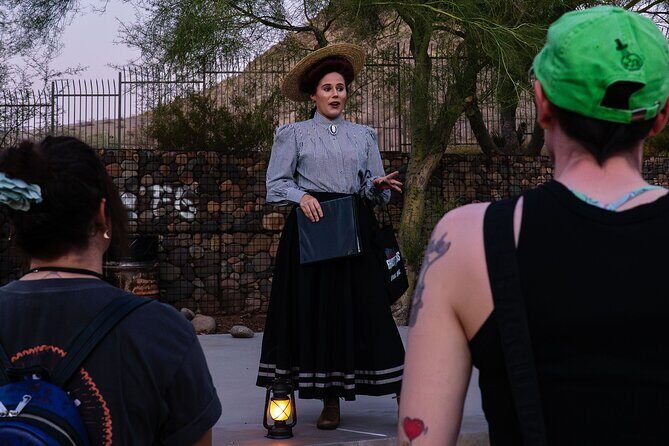
- A lantern-led, outside-only route: you’ll stay on public sidewalks the whole time.
- Historian-trained storytelling: you get ghost tales tied to place and events, not random scares.
- Named Mill Avenue landmarks: Hayden Flour Mill, Laird & Dines Building, Governor Moeur Residence, Tempe National Bank, Casa Loma, and Hayden House.
- Small group size: capped at 20 people, which helps you hear the guide without shouting.
- Short and focused timing: about 2 hours, so you’re not committing a whole evening.
- $35 for the tour ticket only: gratuity and building admission aren’t included.
Why Mill Avenue at night hits different

Mill Avenue at night has a particular feel: sidewalks glow, storefronts quiet down, and your attention locks in on what you’re walking past. That’s exactly the mood this tour leans into. You’re not hunting for ghosts in a dark building—you’re walking the line between everyday streets and places people associate with tragedy, mystery, or unrest.
The best part is how the stories and the setting reinforce each other. When you’re hearing about a specific building while you’re standing near it, the details have a way of sticking. And because the group is small (max 20), the guide can keep a steady pace without turning it into a loud parade.
One practical upside: since you’re staying outside, you don’t have to worry about crowding into enclosed spaces. You also avoid the common disappointment of a tour promising “haunted stops” but then making you sit through long waits for interior access you can’t get.
Other Phoenix city and walking tours in Phoenix


Getting oriented at the Hayden Flour Mill start point

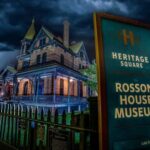
Your tour begins at Hayden Flour Mill, 119 S Mill Ave, Tempe, AZ 85281. It’s a strong starting choice because it immediately puts you in the historic-to-haunted lane. Even before the first story lands, the setting gives you context for why this area attracts legends in the first place.
Expect the meeting point to function as the tone-setter. The guide leads you onward by lantern light, and the night walk becomes the spine of the experience. This matters because you’re not just collecting spooky trivia; you’re learning a route—where each stop fits into the bigger story of the district.
Also, because the tour ends back at the meeting point, it’s easy to build the rest of your evening around it. You’re not stuck far from where you started, and you can plan dinner or a second stop nearby without guessing.
The Mill Avenue walk: what you’ll see at each historic stop

This route keeps you on the main drag and through a series of recognizable landmarks. The big rule: several locations are currently used as homes or businesses, so you’ll never be encouraged to treat them like open attractions. You’ll stay outside, use the sidewalks, and keep respect in the foreground—especially when the story turns darker.
Hayden Flour Mill: where the stories start
Hayden Flour Mill is listed as the first stop, and it sets the tone. On an outside-facing tour like this, the guide’s job is to translate what you can see—facades, scale, street position—into why the place matters for ghost tales. That’s often where these tours either work or flop, and the historian-trained approach is meant to keep it grounded.
What you’ll enjoy here is the blend of atmosphere and specificity. If you like stories that feel anchored in actual locations rather than generic hauntings, this is the start that should hook you.
A drawback to keep in mind: since it’s a walking tour outside for the full duration, you won’t get inside views unless something is explicitly arranged (and building admission is not included). So come ready for “observe and listen,” not “tour and photograph rooms.”
Laird & Dines Building: history you can point to
Next on the list is the Laird & Dines Building. This is one of those names that sounds like it belongs on a sign you’ve walked past without reading it twice. On the tour, the guide turns that kind of passing-by into an on-purpose moment.
The value here is how the guide connects the building to the type of stories people associate with it—ghostly, crime-linked, or just plain unsettling. If you’re the type who likes understanding why legends stick around long after the original events, you’ll probably find this stop satisfying.
Because it’s outside-only, your best experience comes from slowing down and really looking while the guide talks. Don’t just keep walking to “get to the next story.” This style of tour works when you’re present at each location for long enough to let the details land.
Other Phoenix ghost and haunted tours in Phoenix





Governor Moeur Residence: the residential respect rule
Then you reach the Governor Moeur Residence. This stop hits a different emotional note because it’s tied to a home setting, and the tour makes it clear that locals don’t want people barging into private space.
That means you’ll keep your distance and your behavior normal. You’ll get the benefit of hearing how legends and hauntings attach to places where people actually live or work—but without disrespectful tourism energy. If you care about doing your scary-stories “the right way,” this is a tour that aligns with that.
The consideration here is simple: you’ll be viewing from the street like everyone else. If you’re hoping for close access or interior glimpses, this is not that tour format.
Tempe National Bank: when the stories lean darker
Tempe National Bank is another named stop, and it gives the tour a more serious, crime-story flavor. The guide’s historian-trained background helps you connect the dots between what happened and why people later turned it into ghost lore.
This is a great stop if you like stories that feel like they have receipts—events that make you think, not just stories that make you jump. The Hayl-style approach described in the reviews—ghost stories grounded in real events—fits this kind of stop particularly well.
A small “watch out” item: bank or institutional buildings can read as less “romantic haunted” and more “historical unsettling,” depending on your taste. If you want pure paranormal vibes with no grounding, you might find it more factual than film-scary.
Casa Loma: a standout stop name on the route
Casa Loma is on the route, which gives you a break from the straightforward civic-and-industrial feel. Even if you don’t know the building ahead of time, the name helps it register as distinct, and the guide can play with that contrast—making the ghost stories feel like they’re traveling across different kinds of local spaces.
This is the kind of stop that often works well for mixed groups: people who love history feel rewarded, and people who just want a good spooky story get variety.
Because it’s outside-only, your experience depends on you noticing details while the guide talks. Slow down. Look up. Let the place do some of the work.
Hayden House: the one that feels the most personal
Hayden House is the final named stop on the core list. Ending with a place tied to a house makes the tour’s tone feel more personal. It’s the kind of stop where ghost stories often land with extra weight, because residential associations tend to feel closer to real life.
This is also where you’ll likely notice how the guide keeps the pace and the respect rule consistent. You’re not treating lived-in places like sets; you’re listening to the stories from a distance.
As with the other interior-less stops: plan for street views and street-level atmosphere. Building admission isn’t included, so if you want to go inside afterward, you’ll need to handle that on your own.
The few special spots you’re told not to miss
The tour also includes a few special spots that you won’t want to miss. You won’t be wandering aimlessly, but you should go in expecting some quick “extra” stops that add punch to the route. This keeps the walk from feeling like a checklist of only the big-name locations.
Lantern-lit pacing: what “2 hours” really feels like

Two hours is a sweet spot for this kind of tour. Long enough for multiple stops and a real story arc, short enough that you’re not exhausted by the end. Plus, with the max 20-person cap, you should be able to hear the guide without constantly turning your head.
Because the tour is led in English, it’s straightforward to follow. And because it uses a mobile ticket, you’re not stuck juggling paper—handy when you’re doing a night walk.
One key practical point: confirmation is received at the time of booking, and the tour requires good weather. So if you’re planning a weekend or a family outing, I’d treat it like a plan-with-a-plan-B. If weather doesn’t cooperate, you’ll be offered a different date or a full refund.
Price check: is $35 worth it for a haunted walking tour?

$35 per person is not cheap-or-free, but for the format, it looks like fair value. You’re paying for a guided experience with a historian-trained tour guide, a lantern-led route, and a focused 2-hour run across multiple named locations.
What’s not included helps clarify expectations: gratuity isn’t included, and building admission isn’t included. That’s typical for outside walking tours, but it matters. It means you’re paying for the guide and the walk—not for entry fees or interior access.
Also, the tour is often booked about 15 days in advance on average. That’s a sign it’s popular enough that you should plan ahead rather than assuming you can roll in last-minute.
If you’re the kind of person who likes ghost stories that connect to real places and real events, this price probably feels right. If you only want pure jump-scare energy, you may want to compare with other supernatural tours—because the emphasis here is on history plus grounded ghost tales.
Group size, public sidewalks, and how to get the best experience

A max of 20 people can make a noticeable difference. It keeps the tour feeling like a small group night out rather than a big crowd. In practice, smaller groups often mean the guide can slow down at key stops and make sure people aren’t getting lost.
The outside-only rule also changes the tone. You’re not trapped indoors while other people talk over the guide. You’re walking. You’re seeing. You’re listening. That’s why comfortable shoes matter more than you might think.
My advice for getting the most out of it:
- Dress for night walking, not just daytime temperatures. This is especially important since it depends on good weather.
- Stay respectful near residential and commercial properties. The tour’s rules are there for a reason.
- Listen for the connection between each stop and the story. That’s what turns the buildings into more than just background.
Who this haunted Mill Avenue tour suits best
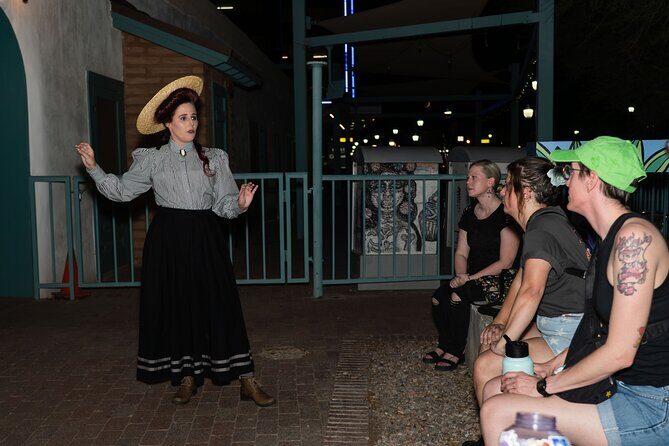
This is a strong fit if you like history with a spooky edge, or if you enjoy crime-story style narratives that connect to specific places. The reviews you’re drawing from highlight guides like Bunny, who blends ghost stories with local history, and Hayl, who focuses on ghost stories grounded in real events with a sharp, story-driven rhythm.
It also works well for people who want a short night activity in Phoenix-area planning without committing to a long, sprawling itinerary. And since most people can participate, it’s not limited to thrill-seekers only.
If you’re sensitive to the idea of walking outside for a full 2 hours at night, that’s the main mismatch to watch for. Similarly, if you want interior access, know that building admission isn’t included and you’ll be outside for everything.
Should you book the Haunted Walking Tour of Mill Avenue?
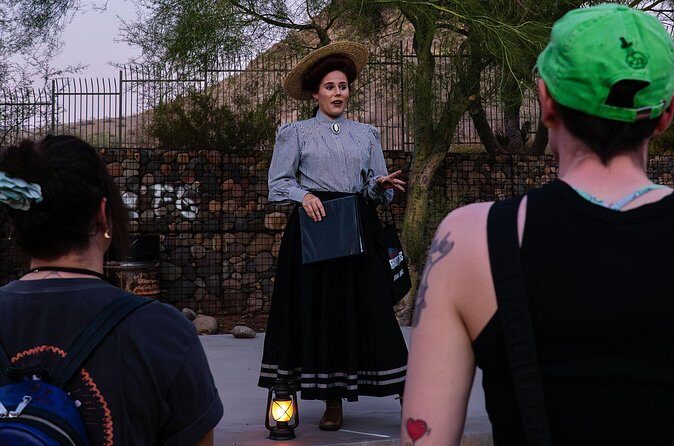
Yes, I’d book it if you want a well-paced, lantern-led ghost walk that treats the stories with context and points you toward real local landmarks. It’s $35 for a guided, historian-trained night outing, and the named stops give you a clear sense of where the legends live.
Hold off if weather might be sketchy for your dates, since the tour requires good weather. Also skip expectations of entering buildings. This is street-level storytelling with a strong route, not a sit-down paranormal show.
If you go in with that mindset, you’ll get the best version of what this tour offers: haunted, but also grounded—with a guide who knows how to make Mill Avenue feel like a story you can walk through.
FAQ
How long is the Haunted Walking Tour of Mill Avenue?
The tour lasts about 2 hours.
How much does the tour cost?
It costs $35.00 per person.
What’s included in the ticket price?
The tour includes a historian-trained tour guide.
What is not included?
Gratuity is not included, and building admission is not included.
Where does the tour start, and where does it end?
It starts at Hayden Flour Mill, 119 S Mill Ave, Tempe, AZ 85281, and ends back at the meeting point.
What language is the tour offered in?
The tour is offered in English.
Are there any weather or cancellation requirements I should know about?
The experience requires good weather. If it’s canceled due to poor weather, you’ll be offered a different date or a full refund. It’s non-refundable and cannot be changed for any reason, and it also requires a minimum number of travelers.