REVIEW · PHOENIX
Phoenix: World’s Only Global Musical Instrument Museum
Book on GetYourGuide →Operated by Musical Instrument Museum · Bookable on GetYourGuide
Music can be a passport. At the Musical Instrument Museum in Phoenix, you see 6,000 years of sound history and try the Experience Gallery in one visit. I love how the museum connects instruments to the places and ceremonies they come from, and I love that it’s built for your ears as much as your eyes. One consideration: you’ll want to slow down, because there’s so much to cover that a rushed walkthrough turns into just a long hallway.
This is not a quiet, read-only museum. With the included GuidePORT audio system, you can watch videos and listen to performances tied to the instruments’ original context, right where you’re standing. I also really liked the practical feel of the visit, with clear focus areas for major regions like Africa, the Middle East, Asia and Oceania, Latin America, Europe, and the United States/Canada.
In This Review
- Key things you’ll notice right away
- The big idea: a world map you can hear
- Museum flow: plan for a self-guided circuit
- Entering the museum: parking, staff, and practical rules
- The real highlight: 6,000 years across 200+ regions
- GuidePORT audio: how to make the museum feel alive
- What you’ll find in each major region
- Africa
- The Middle East
- Asia and Oceania
- Latin America
- Europe
- United States / Canada
- The Experience Gallery: the part that makes it fun
- Electronics and the modern layer of learning
- Café Allegro: where the rules make your day easier
- Value check: is $20 worth it?
- Who this museum suits best
- Final thoughts: should you book?
- FAQ
- How long is the Musical Instrument Museum experience?
- What does the ticket price include?
- What is not included in the price?
- Where do I park or enter?
- Can I touch or play instruments at MIM?
- Does the museum provide an audio guide?
- Are food and drinks allowed inside the museum?
- Are there restrictions on bags and items?
- Is MIM wheelchair accessible?
- Are any weapons or sharp objects allowed?
Key things you’ll notice right away

- Over 4,300 instruments in one place, spanning more than 200 countries and regions
- GuidePORT audio guide that pairs what you see with videos and listening in context
- A globe-first approach, grouped by major world regions
- A hands-on Experience Gallery where touching and playing is part of the plan
- The museum’s specialty: rare, fine-condition examples and historically significant instruments
- A visit that can easily stretch if you’re the curious type, like the folks who say they could spend a whole day
The big idea: a world map you can hear
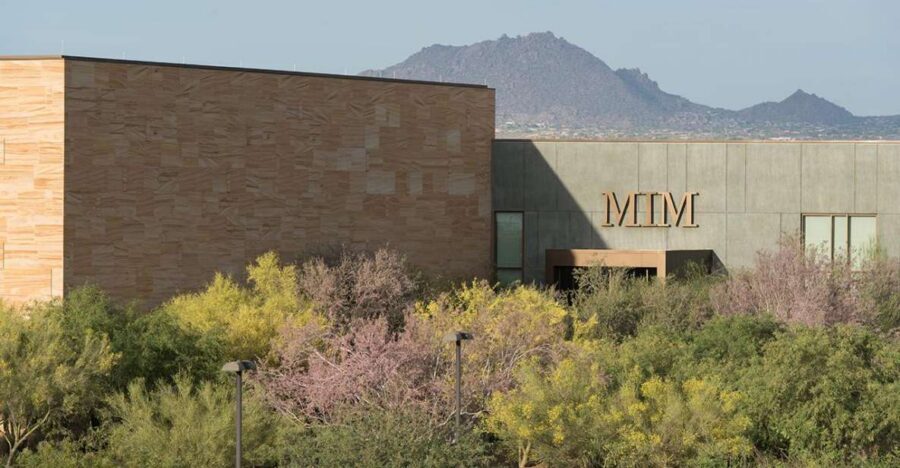
The Musical Instrument Museum (MIM) feels like someone took a world atlas and translated it into sound. The museum’s pitch is simple: you can trace musical heritage across time and geography, all under one roof in Phoenix. With exhibits that reach back roughly 6,000 years, it’s a lot of scale for a single-day visit.
For me, the best part is the museum’s approach to meaning. Instruments aren’t displayed like trophies behind glass only. You’re meant to connect form to function: ceremonial roles, local traditions, and the ways different communities make music. You’ll see instruments representing major world regions—Africa, the Middle East, Asia and Oceania, Latin America, Europe, and the United States/Canada—so the museum doesn’t just show variety. It also gives you structure.
At $20 per person for general admission, it’s worth thinking about value as “how much museum per hour.” With thousands of instruments and an audio system included, you’re buying time and access, not just a couple of rooms.
Other museum experiences in Phoenix

Museum flow: plan for a self-guided circuit
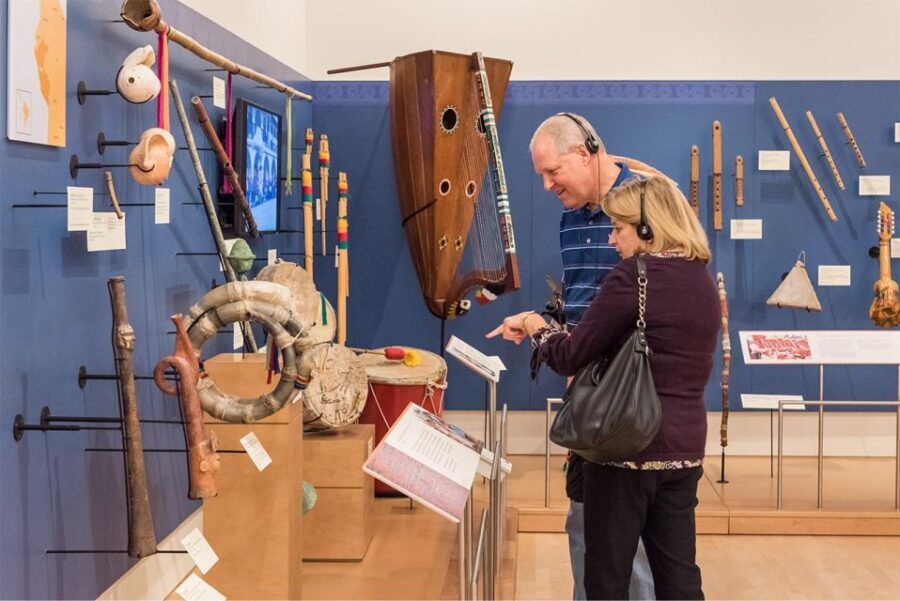
MIM is a one-day experience that’s easy to shape around your pace. You don’t need to race from exhibit to exhibit, but you should expect at least a few hours, especially if you actually use the audio features and stop for hands-on moments.
Here’s a practical way to think about the day:
- Start with orientation and the overall layout (a brochure with a map is included).
- Then move through the major regional areas, treating them like stops on a long route.
- Use GuidePORT as you go, so your listening matches what you’re looking at.
- Save the most physical fun—the Experience Gallery—for when you’re ready to slow down and try things.
This is also the kind of museum where your plan can change on the fly. If one region grabs you, you can spend longer there without the day collapsing.
Entering the museum: parking, staff, and practical rules
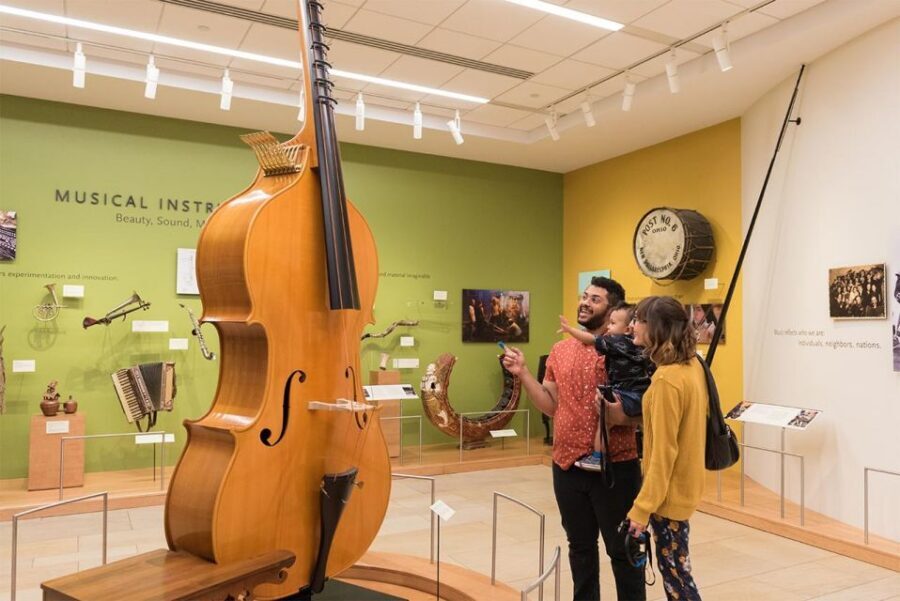
Your practical starting point is the parking lot entrance on Mayo Blvd., just south of Loop 101. It’s complimentary, which matters because it removes one more variable when you’re building a day trip.
Inside, the museum keeps things simple but firm on boundaries:
- No weapons or sharp objects
- No food or drinks in the museum
- Larger items have limits: backpacks, purses, and bags larger than 18 inches by 18 inches (plus some items like umbrellas or tripods) need to be checked at Guest Service
If you’re traveling light, you’ll feel more relaxed. If you’re not, it’s still manageable, but you’ll want a little buffer so you’re not stuck waiting at the check-in point with tired legs.
Also, if you’re planning to snack, remember that food and beverages—including water—are only permitted at Café Allegro. Bring patience, not a water bottle.
The real highlight: 6,000 years across 200+ regions
The museum’s core strength is its global scope. MIM brings together an expansive collection—about 4,300 instruments—with musical traditions spanning over 200 countries and regions. That can sound abstract, but once you’re inside, it becomes a satisfying pattern: you can keep encountering new instrument families and new playing styles, then connect them back to the place they belong to.
You’ll see major world regions represented in a way that helps your brain build connections. The exhibit approach is organized around geography (not just instrument types), so you can compare how different communities use sound—whether for ceremonies, storytelling, courtly contexts, celebrations, or everyday music-making.
The museum also leans into quality. Many displayed instruments are described as rare examples, fine examples of their kind, and historically significant pieces tied to distinctive musical cultures. That matters because you’re not just looking at random replicas. You’re seeing objects with provenance—things worth slowing down for.
GuidePORT audio: how to make the museum feel alive
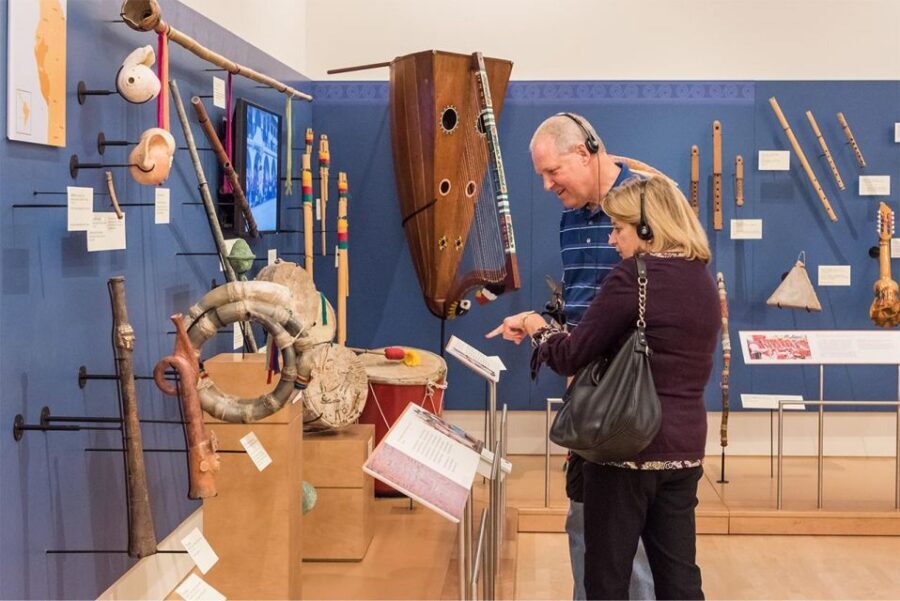
A lot of museums have audio guides. What makes MIM’s system feel useful is that it’s designed to pair sound with what you’re seeing. The included GuidePORT lets you watch videos and listen to performances on display instruments, placed in their original context.
This is where your visit changes from “interesting pictures” to an actual listening experience. Instead of reading a label and moving on, you can stand in front of an instrument and let the audio bring the story to life: what it sounds like, how it’s played, and how it fits into the culture the instrument comes from.
Practical tip: don’t treat GuidePORT like a passive download. Treat it like a choice you actively make. If you hear something that makes you curious, pause and switch your focus from the general gallery flow to that specific instrument. That’s how you avoid turning the day into a blur.






What you’ll find in each major region
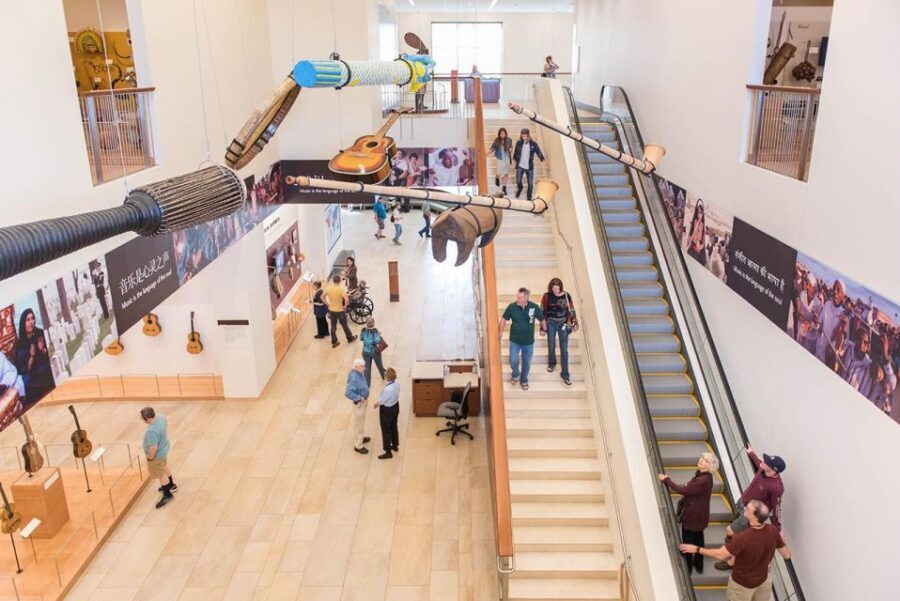
MIM’s galleries are grouped by major world regions, which is exactly what helps first-time visitors.
Africa
You’ll come across instruments representing musical heritage across the continent. The displays are organized so you can keep comparing instrument forms and playing styles while staying oriented in a larger geographic story.
The Middle East
Expect displays that highlight cultural roles of instruments—especially where music connects to ceremony and tradition. Even if you don’t know the names, the audio and video support helps you make sense of how the instruments are used.
Asia and Oceania
This area is a big draw if you love sound variety. You’ll likely find yourself slowing down because the instrument designs and playing techniques can feel different from what you’re used to seeing.
Latin America
Here the museum connects instruments to regional performance contexts. It’s a good section to take your time with if you enjoy learning how instruments map to cultural celebrations and group music.
Europe
European exhibits help show how instruments evolved and how distinct musical traditions shaped instrument design. It’s also a useful contrast section, especially after you’ve already spent time with other regions.
United States / Canada
You get a view of musical traditions closer to home, but in the same museum framework. The payoff is that you can compare what’s familiar with what you didn’t realize had deep roots in different cultural contexts.
Even if you don’t finish every single display, the region-based flow keeps you from getting lost mentally.
The Experience Gallery: the part that makes it fun
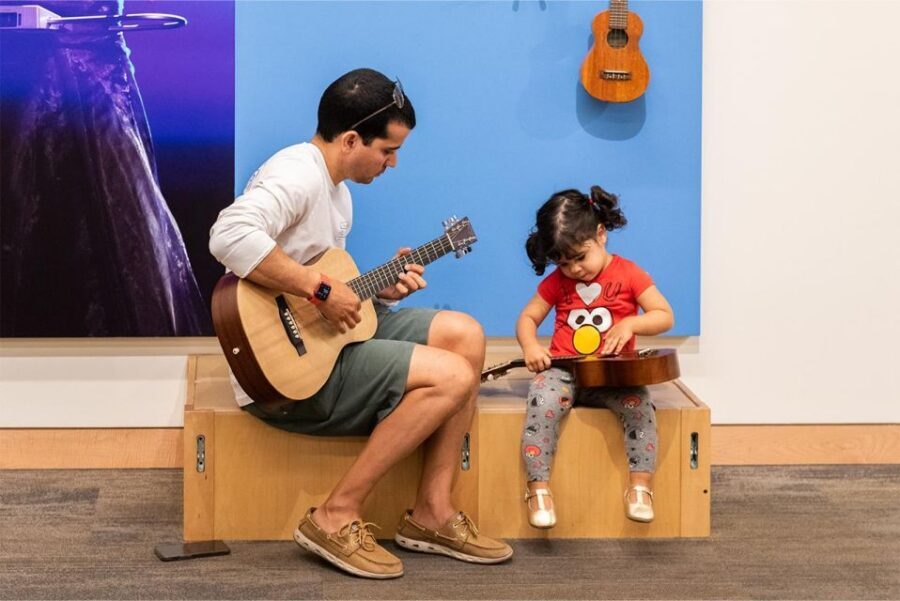
The Experience Gallery is the museum’s hands-on heart. It’s not just for looking; it’s for touching and playing certain instruments. That matters because music becomes real faster when your hands get involved.
If you’re the kind of person who learns best by doing, this section is where the value jumps. You’ll walk away with a different kind of understanding—less “I saw an instrument” and more “I felt how it works.”
It’s also one of the best ways to keep a big museum from feeling overwhelming. When your brain starts to fatigue, the chance to try something gives you a reset.
Electronics and the modern layer of learning
One of the standout comments from recent visitors is the presence of electronics and the way they support the exhibits. In practical terms, that usually means audio and visual features are not afterthoughts. They’re part of how the museum teaches.
For you, that translates into a smoother learning curve. You can focus less on decoding labels and more on using the GuidePORT features to understand what you’re hearing and seeing.
And if you’re with a musician in the group, this is especially likely to land well. You’ll have plenty to discuss: what makes an instrument behave a certain way, how different regions emphasize different playing approaches, and why the same family of instruments can function differently in different cultures.
Café Allegro: where the rules make your day easier
If you want a break, Café Allegro is where food and beverages are allowed. That’s useful because it creates a clear rhythm: you can plan your timing around a real stop instead of worrying about snacking in a restricted area.
Recent comments also singled out the café staff as excellent, so you’re likely to find service that doesn’t treat a museum-caffeine break like an inconvenience.
Practical tip: plan your snack break before you hit the Experience Gallery. Once you start trying instruments, you’ll appreciate having a full tank and not feeling rushed.
Value check: is $20 worth it?
For general admission at $20 per person, the value is strong because you’re paying for a full-day museum experience built around:
- Thousands of instruments (about 4,300)
- Global coverage (200+ countries and regions)
- Included audio and media via GuidePORT
- A hands-on section (the Experience Gallery)
- A structured exhibit layout by major world regions
If you’re the type who likes museum learning but hates “drive-by sightseeing,” MIM is one of the better uses of a day in the Phoenix area. If you only want a quick hit—like, you’d rather see a few big highlights and move on—then you might feel the scale is too much.
Who this museum suits best
This is a great fit if:
- You like culture learning that’s tied to objects and actual sound.
- You’re curious about how musical traditions connect across distance and time.
- You want a museum where your ears matter, not just your eyes.
- You’d enjoy trying instruments yourself in the Experience Gallery.
It’s also a smart choice for families with curious kids, and for adults who want something different from the usual art-and-architecture museum mix.
If you’re traveling with someone who plays music or studies it, expect extra conversation value. The sheer range and the included listening features create plenty of things to talk about.
Final thoughts: should you book?
If you’re considering a one-day stop in Phoenix and you want a museum that actually teaches through sound and hands-on play, I’d book MIM. The combination of 4,300 instruments, global regional structure, and the included GuidePORT system makes the ticket feel like you’re getting real learning time, not just entry.
Skip it only if you know you’re unlikely to use the audio/video features or you prefer smaller museums. Otherwise, this is exactly the kind of place where a day can fly—especially once you start playing in the Experience Gallery.
FAQ
How long is the Musical Instrument Museum experience?
It’s a 1-day experience.
What does the ticket price include?
General admission entry is included, along with the GuidePORT system (audio guide) and a brochure with a map.
What is not included in the price?
Concert admission and any special exhibition are not included.
Where do I park or enter?
The parking lot entrance is on Mayo Blvd., just south of Loop 101, and parking there is complimentary.
Can I touch or play instruments at MIM?
Yes. There is an Experience Gallery where you can touch and play some instruments.
Does the museum provide an audio guide?
Yes. The GuidePORT system is included with general admission and it includes audio.
Are food and drinks allowed inside the museum?
No. Food and beverages, including water, are not permitted inside the museum. Café Allegro is the place where food and drinks are allowed.
Are there restrictions on bags and items?
Yes. Bags larger than 18 inches by 18 inches must be checked at Guest Service, along with items such as umbrellas, tripods, and selfie sticks.
Is MIM wheelchair accessible?
Yes, it is wheelchair accessible.
Are any weapons or sharp objects allowed?
No. Weapons or sharp objects are not allowed.