REVIEW · PHOENIX
Sound Meditation Under The Desert Stars
Book on Viator →Operated by Heller Good · Bookable on Viator
A quiet night in the desert hits different. This Phoenix experience mixes restorative yoga, breathwork, and a full Yoga Nidra sound meditation—then tops it off with stargazing under the night sky.
I love the way the session starts with a warm welcome and guided intentions, because it puts everyone on the same page fast. I also like that the sound healing is more than a vibe: crystal bowls, vocal toning, tongue drum, and chimes are used to help you settle deeply. One thing to consider is that the format is gentle and still, so if you’re looking for high-energy exercise or sightseeing that fills every minute, this may feel slower than you want.
If you can handle a small group outdoors in changing light, you’ll probably leave feeling both relaxed and oddly refreshed—like your mind got a software update.
In This Review
- Key things I’d bookmark before you go
- Why this 2-hour desert sound session feels different
- Starting at Hunt’s Tomb: the tone gets set before you move
- The sunset views: why the desert timing matters
- Restorative yoga postures that actually feel doable
- Breathwork: the switch from thinking to feeling
- The heart of the night: Yoga Nidra with crystal bowls and more
- Papago Park and the stars: reflection time that doesn’t feel forced
- What you get for $69: value that’s more than the ticket price
- Who this suits best (and who might want something else)
- Weather, timing, and what to plan for
- Should you book this Desert Stars sound meditation?
- FAQ
- Where does the tour start?
- Does the experience end at the same place?
- How long is the experience?
- How much does it cost?
- What language is the tour offered in?
- How many people are in the group?
- What’s included in the experience?
- Are service animals allowed?
- Is good weather required?
- What is the cancellation policy?
- When do I receive confirmation?
Key things I’d bookmark before you go
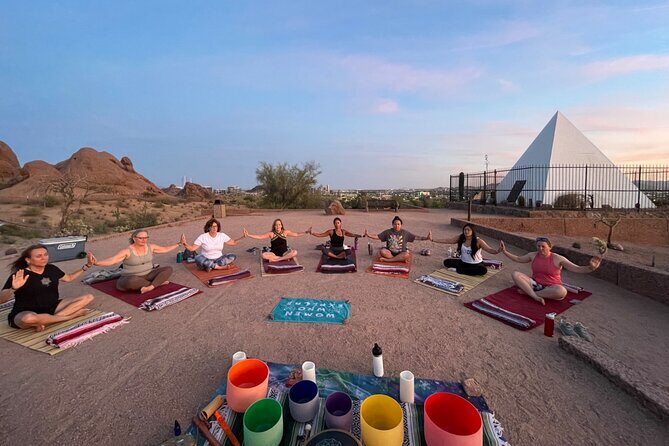
- Small group size (max 8), so the mood stays personal and calm
- Restorative yoga + breathwork before the deeper meditation
- Yoga Nidra guided relaxation with crystal bowls, vocal toning, tongue drum, and chimes
- Desert stargazing time for reflection after the sound session
- Hand-woven mat and blankets included, so you’re not scrambling for gear
- Built-in intention setting and closing circle, so the experience feels complete
Why this 2-hour desert sound session feels different
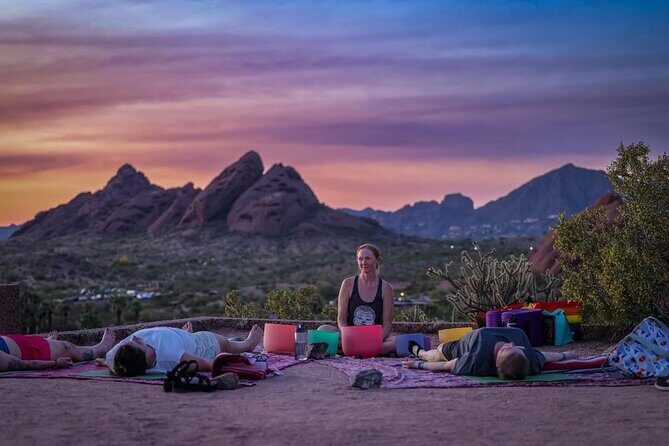
This is the kind of evening that doesn’t try to pack in ten things. You get a focused arc: arrive, settle, move gently, breathe, then go deep with guided relaxation. The payoff is that you’re not just hearing soothing sounds—you’re also getting your body and mind ready to receive them.
It’s also smart that it’s timed around sunset. As the daylight fades, you get that desert shift: warmer views, long shadows, cooler air, and eventually the first true stars. Even if you’re not a “stargazer,” the timing helps your brain stop multitasking.
For $69 per person and about two hours, you’re paying for a guided, structured experience—not just a meditation class in a studio. And because the group is capped at eight, it stays comfortable. You’re less likely to feel like a number.
If you're still narrowing it down, here are other tours in Phoenix we've reviewed.



Starting at Hunt’s Tomb: the tone gets set before you move
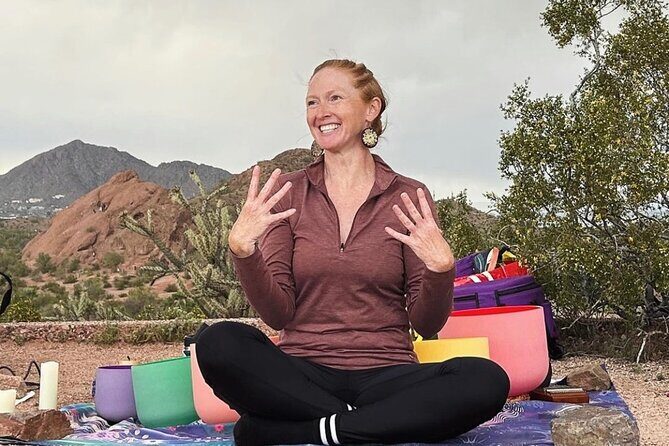
You meet at Governor Hunt Tomb Parking, then the evening flows from there. Hunt’s Tomb is the first stop, and it works well as a starting point because you’re already in the right environment—desert, open sky, and that sense of space that makes breathwork and sound healing feel natural instead of forced.
The session begins with a warm welcome that’s meant to feel safe and supportive. Then you set personal intentions for the evening. That sounds a little “self-help,” but in practice it gives your mind something to return to if it wanders during meditation. It’s also a good social reset for a group of strangers. You’re not just showing up to sit quietly; you’re arriving to share a small, human moment.
One practical benefit: when everyone sets intentions early, the later parts—yoga, breathwork, and Yoga Nidra—land more smoothly. Less awkwardness. Fewer distractions.
The sunset views: why the desert timing matters
As the sun descends, you get breathtaking views of the desert and nearby mountains while you learn about the spiritual significance of the area. I appreciate this approach because it grounds the whole experience in place. You’re not doing a generic meditation anywhere; you’re doing it in a landscape that has meaning to people who spend time here.
This also helps with pacing. When you’re outside and the light changes, the body naturally slows down. You stop rushing your thoughts. Even a short conversation or a guided explanation can make the stargazing part feel more intentional.
If you’re the type who thinks, I’ll just come for the yoga, the view portion is worth staying present for. It’s one of the reasons the experience doesn’t feel like a screen recording of relaxation. You’re doing it with real night air and real sky.
Restorative yoga postures that actually feel doable
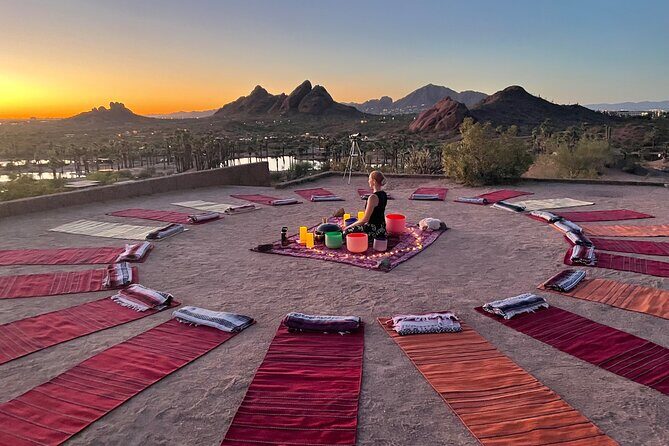
Next comes a series of restorative yoga postures designed to help your body settle and release tension. This isn’t about pushing flexibility or hitting perfect poses. It’s more about giving your muscles permission to stop bracing.
Restorative yoga works best when you let go of the goal of improvement and treat it like recovery. If you’ve ever left a workout feeling more tense than when you started, this style is the opposite. You’re moving slowly enough to notice your breathing, and gentle enough that most people can participate.
A tip for making this part click: stay with your breath rather than trying to “win” the posture. The point is not performance. It’s getting your body quiet so the later sound work has room to work.
Breathwork: the switch from thinking to feeling
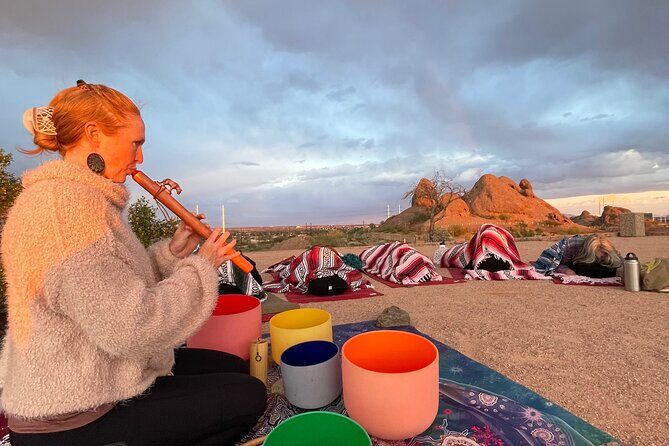
After the yoga, you’ll do breathwork exercises to calm the mind and center your thoughts. This is a key step that many sound sessions skip. By adding breathwork before the meditation, the instructor helps you transition from daily mental chatter into a more receptive state.
I like this order a lot. Sound healing is easier when your system is already downshifting. Breathwork gives you that nudge.
You don’t need special breathing talent. The main thing is to follow along and keep it comfortable. If something feels too intense, you can usually soften it and still get the benefits—because the goal is calming, not strain.






The heart of the night: Yoga Nidra with crystal bowls and more
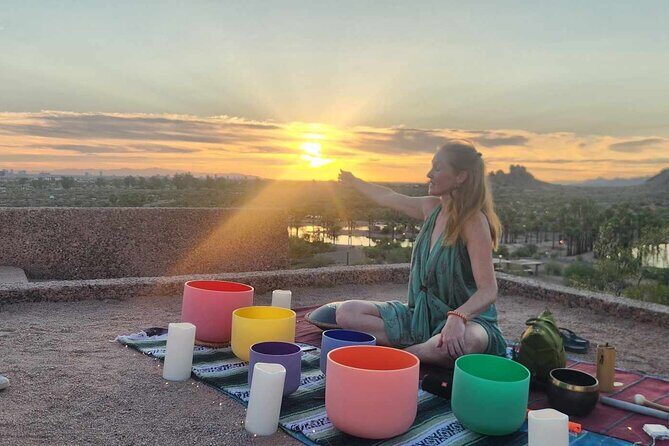
Twilight turns to night, and then you move into Yoga Nidra Meditation. This is guided, and it’s paired with sound healing using crystal bowls, vocal toning, tongue drum, and chimes.
Here’s why that combo matters. In Yoga Nidra, your attention is guided inward—often scanning sensations, letting thoughts pass, and relaxing layer by layer. If the sounds are pleasant but random, it can distract you. But if the sounds are paced well, they help “hold” your attention in a soothing way. That’s where crystal bowls and gentle percussion can really shine: they create a continuous, resonant environment.
Vocal toning adds another layer, because it gives your mind a rhythm to follow. Tongue drum and chimes keep it airy and spacious, which can be helpful if you tend to feel restless in total silence. Together, it’s like a sound blanket.
During this hour, the experience is less about doing and more about receiving. When I hear feedback like one participant named Kristin saying she left feeling relaxed yet energized—yes, energized—that’s exactly the result I’d expect when relaxation is paired with a strong guided process, not just “sit and hope.”
Papago Park and the stars: reflection time that doesn’t feel forced
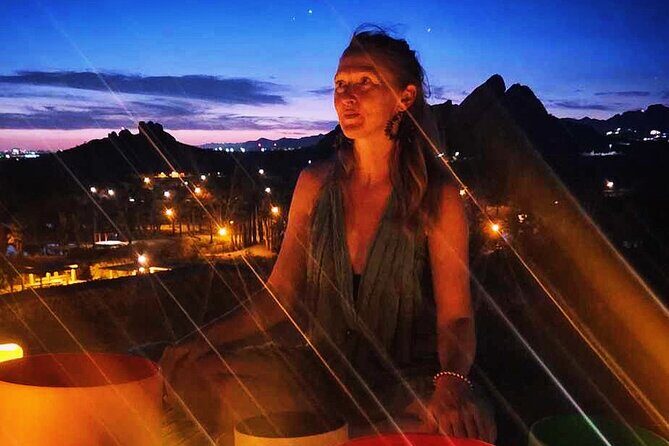
After the sound healing session, there’s time to gaze at the stars. Then you reflect, reconnect with your intentions, and share experiences at the end.
This part is valuable even if you’re not a die-hard astronomy person. Stargazing does two things: it creates awe, and it pulls your attention out of your usual loop. It’s harder to overthink when your gaze literally has nowhere to go but up.
The closing circle also matters. Without it, these kinds of sessions can feel like a private reset you can’t translate into real life. When you share briefly, you get a sense of meaning—plus you hear how other people experienced the same sounds and meditation. That can help you understand what worked for you.
What you get for $69: value that’s more than the ticket price
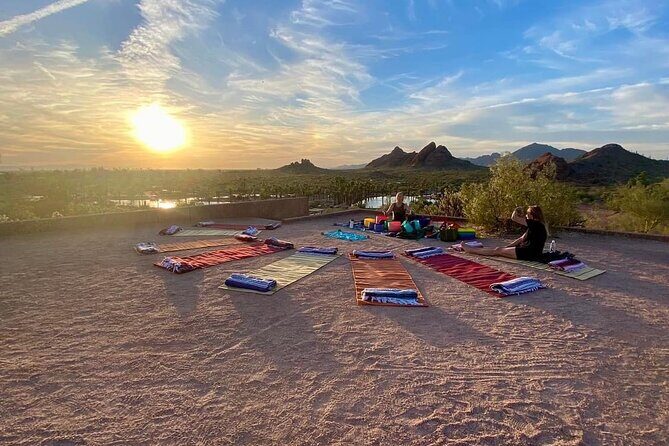
At $69 per person, the key value isn’t just the instruction. It’s the full package:
- A structured evening (welcome, intentions, yoga, breathwork, Yoga Nidra, sound healing, stargazing, closing circle)
- A small group cap of eight, which keeps the atmosphere calm
- Hand-woven yoga mat and yoga blankets included (eco-friendly setup means you’re not lugging everything or relying on borrowed gear)
Those included items sound small until you’ve done outdoor yoga without proper support. A good blanket changes everything when you’re sitting still and transitioning from guided relaxation to star-gazing.
And the pacing matters. Two hours is long enough to go from awake to settled, but short enough that you don’t feel like your evening disappeared.
One more value note: the experience is offered in English, and you get a mobile ticket. That keeps it simple.
Who this suits best (and who might want something else)
This is ideal if you want a calm evening with real guidance. You’ll like it if you enjoy restorative movement, breathwork, and guided meditation, and if you’re curious about sound healing as a practical tool for stress relief.
You’ll also likely enjoy it if you want a smaller group experience. Maximum eight means fewer distractions and a more grounded atmosphere.
Who might consider skipping it? If you’re after intense exercise, or if you want constant activity and big sightseeing beats, this probably won’t match that expectation. This is a stillness-forward evening.
Weather, timing, and what to plan for
This experience requires good weather. That matters because so much of it happens outdoors: sunset views, after-dark stargazing, and the meditation environment.
So I’d plan your evening like a flexible outdoor activity. If you’re the type who hates last-minute changes, build in a little patience. On the bright side, if the weather doesn’t cooperate, the organizer would offer a different date or a full refund.
Also, aim to arrive with time to settle. The first part is about getting comfortable and connected. If you rush in late, you’ll miss that “safe zone” setup, and the rest will feel less smooth.
Should you book this Desert Stars sound meditation?
Yes—if you want a guided, calming evening that mixes gentle movement with a real Yoga Nidra sound experience in the open desert. This isn’t just relaxation for the moment. It’s structured enough to feel complete: intentions at the start, restorative yoga and breathwork in the middle, then a focused sound-guided hour, followed by stargazing and a closing circle.
I’d skip it only if you strongly dislike stillness, or if you need a high-energy itinerary with lots of on-the-go sightseeing. Otherwise, it’s a thoughtful value at $69: small group, included mat and blankets, and a sound-and-silence experience you can’t replicate at home in the same way.
FAQ
Where does the tour start?
It starts at Governor Hunt Tomb Parking, F324+JP, Phoenix, AZ 85008, USA.
Does the experience end at the same place?
Yes. The activity ends back at the meeting point.
How long is the experience?
It lasts about 2 hours.
How much does it cost?
The price is $69.00 per person.
What language is the tour offered in?
It’s offered in English.
How many people are in the group?
The maximum group size is 8 travelers.
What’s included in the experience?
It includes a hand-woven yoga mat and yoga blankets for comfort.
Are service animals allowed?
Yes, service animals are allowed.
Is good weather required?
Yes. The experience requires good weather.
What is the cancellation policy?
You can cancel for free up to 24 hours in advance for a full refund.
When do I receive confirmation?
Confirmation is received at the time of booking.